Linerik hub . Névoa . broken bones . Pandrake
Witch's Journal
Altaria city, Sunday, June 19, 1050 after Bloom
Pandrake
Edition of the Crescent Moon Cycle
Written at the foot of the Castle of ScalesOf the Draconic Kingdom and the Winds of DestinyIt stands in the Castle of Scales, the beating heart of the dragonborn kingdom. Its walls, carved by force and fire, guard not only riches and weapons, but traditions older than the memory of deeds worthy only of scaly beings.It is said that the throne of Pandrake has passed from father to son. King Bran ascended to the throne not long ago, and at his side is Dragonheart, the focus of the new courting season. Will Dragonheart be Bran's weakness? Or a new way of life for warm-blooded beings?
The citizens of Pandrake are excited about the upcoming ceremony.

Click on the image to learn more
Broken bones clan

Click on the image to learn more
Something strange has been in the air ever since the orcs showed up in Frostvalley. That invasion twenty years ago, which at the time seemed like the beginning of the end, now feels almost like a silent full stop. The orcs, once known for their explosive temper and fierce isolation, have simply... cooled off. They disappeared from the map, with no more invasions, as if they had resolved something important in that lightning raid.Did they get what they wanted? Supplies? Herds to survive the increasingly frozen mountains? Or was the invasion just a delayed reflection of the Bloom War, whose scars continue to spread like cracks in thin ice, reaching even those who swear they've never heard of it? I confess: this intrigues me as much as it sends a chill down my spine. Something has changed... and it doesn't seem to have been by chance.
Circle of faires
There is a restless murmur among the people and ports that Fairy Island is in great turmoil; however, the truth remains veiled, for these creatures, small in body and vast in cunning, do not allow anyone to approach their shelter. What can be prudently and fearfully made known is this solemn warning: do not approach the island.

Click on the image to learn more
Mythology of the stars

Click on the image to learn more
In the sky of Mystindor, every star holds a secret. They are not merely distant lights, but records of battles, forbidden pacts, and entities that shaped worlds. From Árkar, the first to charge headlong into destruction, to Zhyr, whose silent vengeance rises as a warning in the heavens, each constellation embodies a myth, a primordial force that echoes through mortal lives.Get ready to explore the mythology: colossal spirits, warriors turned into stars, and beings who carry memories and the balance of the universe. Within each sign lies a story of power, sacrifice, and transformation, and perhaps the key to understanding one’s own destiny.
latest releases written by the witch
Lucan, a bitter warrior forged in the shadows of war and mutations that turned him into a relentless monster hunter, lives at the mercy of his fate. After a life of battles and deep scars, he finds himself torn between his duties as a warrior and his intense love for Kai, the woman who warms his cold heart. On a journey to destroy a fallen angel, Lucan faces not only monsters but also his own doubts and internal conflicts.Amid the brutality of his mission, Lucan writes passionate and reflective letters to Kai, revealing his soul, his fears, and the depth of his love for her. Each letter lays bare his sacrifices, heroic deeds, and the losses that have shaped his path.

wairror
The story follows Gamon Firesoul, the authoritarian king of the Pandrake realm, as he faces a devastating war to protect the neighboring village of Frostvalley while managing rising tensions with his son, Bran. Torn between the strict discipline imposed by his own father and his wish to be a better parent, Gamon struggles to balance duty and family.The unexpected discovery of a baby by Orzen among the ruins of battle challenges Pandrake’s long-standing traditions of pure blood, forcing Gamon to confront and question his own values.

Forged

What Is Pandrake?
Pandrake is one of the settings within the larger world known as Mistyndor, a fantasy universe where multiple stories and characters can exist, some interconnected, others completely independent from one another.
Cult of Onyx
Mystery
Beyond militarism and raw strength, there exists a mysterious cult known as the Primogenitors of Onyx.
They worship a mother-goddess called Onyx and have no single leader. Instead, they are guided by the Catalyst Brothers, three figures who interpret the divine will.
The cult performs rituals during waxing moon nights in a gothic church. Offerings, ranging from jewels to animals, are burned in a draconic flame to renew their bond with the goddess.
Castle of Scales
The Heart of Pandrake
Pandrake is one of the settings within the larger world known as Mistyndor, a fantasy universe where multiple stories and characters can exist, some interconnected, others completely independent from one another.

Dragonheart
The Outsider Soul of the Story
Dragonheart begins with a tragic origin: a baby rescued from the ruins of ancient Frostvalley after its destruction in a terrible war.
The great dragon Gamon Firesoul adopts him, despite Dragonheart being of another race. This alone shows how special he is — not just because he survived, but because of the potential Gamon saw in the child he took in.
After Gamon’s death, his blood son Bran ascends the throne of Pandrake, becoming responsible both for the kingdom and for protecting Dragonheart.
Dragonheart’s Journey
The main story hints that Dragonheart’s destiny goes far beyond feasts and courtly intrigue. He must defend the kingdom, forge alliances, face enemies, and uncover his true role in the world. That path leads to adventures across wild regions, diplomatic challenges, and confrontations with forces that threaten Pandrake itself.
Witch's note: We have a book in our collection that tells the story of Gamon finding Dragonheart.
Pandreke island

+🔍︎

Pandreke island
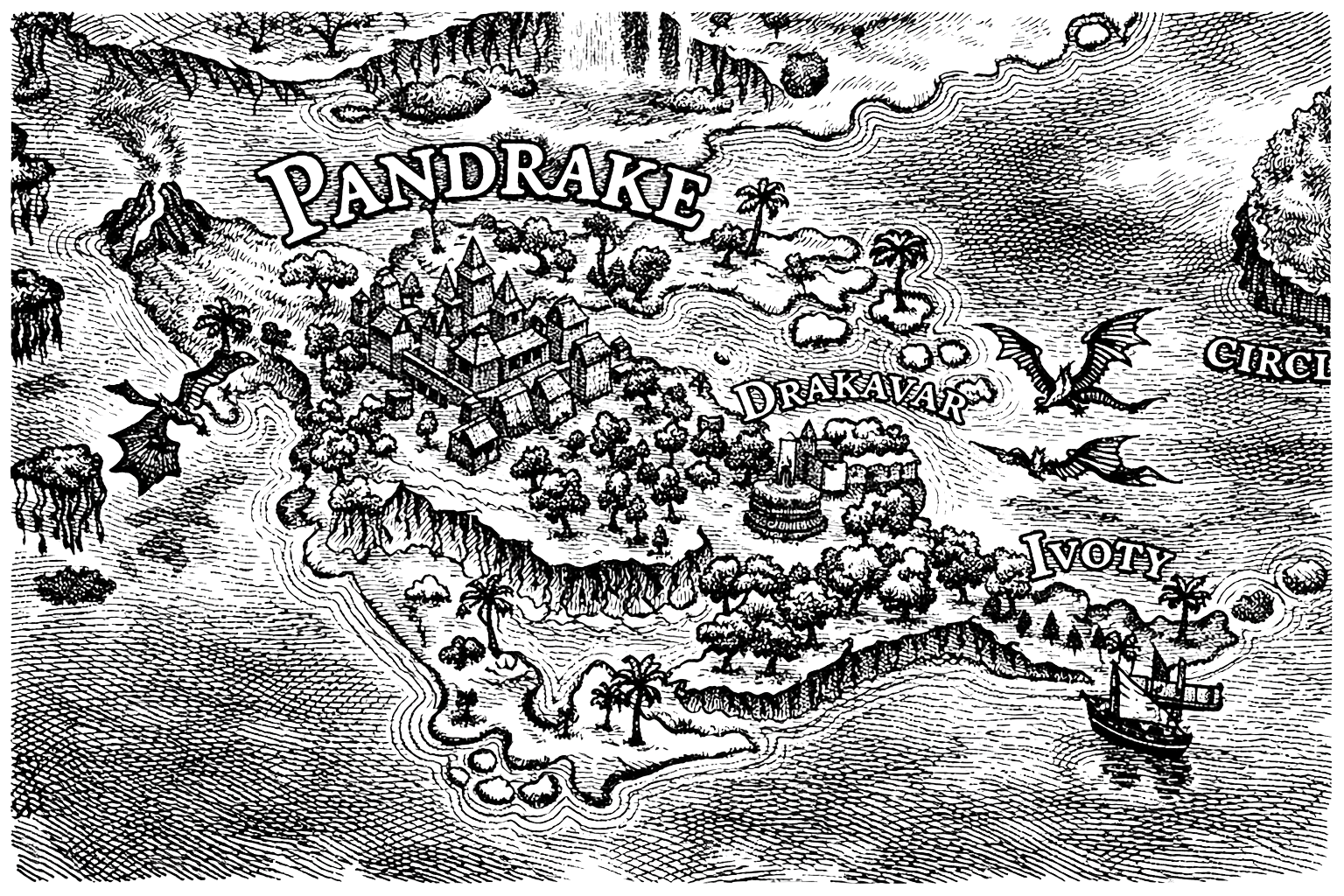
They say that Pandrake is no ordinary island. Its shape, a dragon carved by the hands of the sea and fire, stretches across the southern waters, its mountains and plateaus forming a spine of stone and obsidian. Long before the great towers glimmered under the sun, before the streets carried the mingled scents of molten metal and baked bread, the winds whispered the stories of fire, of dragons that had ruled the land when mortals were still young. It was in this harsh cradle that the city of Pandrake rose, built upon strength, pride, and the unyielding scales of its people.At the center of the island lies the city of Pandrake itself, the heart around which villages and smaller cities like Drakavar and Ivoty orbit, each a satellite of culture and commerce. A lone volcano rests at the northern tip, a silent guardian far from the bustle of streets and forges, while thermal springs bubble quietly across the land, lending warmth to homes and the dragons who dwell within them.The architecture of Pandrake speaks of its people. Towers of black marble, obsidian, and metal soar above the streets, not to hide but to proclaim. Every spire, every carved gargoyle, every ornate doorway tells a story of fire, strength, and honor. Wood is present only where necessity allows, adorning homes of the middle class, but the soul of the city beats in stone and steel.The Scale Castle, built centuries ago by Firesoul, the first king, dominates the skyline. Its black marble walls catch the sunlight like molten shadow, while stained glass windows trace the history of the kingdom in color and light. Around it, the Great Forge never sleeps. Its hammers ring out day and night, shaping weapons, armor, and tools, but also forging the life of the city itself. Taverns, heated homes, and bustling markets pulse around this hearth, for the Forge is not just metal and fire—it is the social heart, the place where life flows and clans meet, debate, and trade.Onyx Church stands in solemn contrast, its spires rising like claws toward the sky. Here, the Brothers of the Onyx Cult perform sacred rites: blessings, weddings, funerals, all watched by the statue of the goddess herself in the central square. It is here that the people honor Onyx, the mother of scales, whose body is said to have become the island itself, rising from the ocean so that dragons, dragonborn, and kobolds might walk upon her back.The streets of Pandrake are alive with purpose. Children race between stalls, sparks dancing from their claws as they play. Mercenaries and warriors train in open plazas, practicing strikes and flights, honing skills that might one day defend the city—or conquer it. The Twilight Market is a riot of spices, fabrics, and glittering metalwork, while wyverns swoop overhead in carefully choreographed drills. Every alley, every square, every forge bears witness to a culture built on honor, courage, and the relentless pursuit of excellence.Life in Pandrake is measured by rituals. The Youth Ceremony celebrates the arrival of new life, interpreting the color and size of each egg as a prophecy of the future. The Coming-of-Age Rite, far from a simple birthday, demands strength and valor in combat against beasts of the dragonborn’s choosing, witnessed by family and clan. In spring, the Ritual of Flowers fills the squares with dance and fire, music and light, a festival where couples meet and communities renew their bonds beneath fireworks and magic.Honor is the currency of society. A dishonored dragonborn may lose everything, forced into exile among distant cities like Folkia, seeking a new clan to restore their name. Clans control every aspect of life: Founding Clans rule with ancient authority, Warrior Clans defend the city’s walls, and Artisan Clans forge the tools and wealth that sustain the people. Those without a clan—the Clutchless—survive as best they can, striving to regain their place among the honored.Military might is not hidden. Every citizen trains from youth, yet the elite Talons of each clan compete in the Coliseum, demonstrating prowess and loyalty in games that blend ritual, combat, and politics. Walls and cannons are built not only to defend but to remind all that Pandrake is a fortress, a place where strength and strategy matter above all.Beyond the city, the island stretches with other centers of life. Drakavar rises along the coast, shaped by the winds and waves, governed by House Eldrax, a distant branch of the Firesoul dynasty. Despite separation, trade and diplomacy flow steadily, while forests and mountains called the Spine of Onyx run between cities like the backbone of a sleeping giant.Outside the island, Pandrake views the world with cautious respect. Humans are ambitious but impatient; dwarves are worthy allies; orcs are strong but reckless; elves are elegant yet frustratingly aloof. Tieflings and “cursed” races draw suspicion, their corrupted lineage a provocation to the dragonborn obsession with pure blood. Trade flows only under the shield of military might, and every political move is calculated, every alliance weighed with the precision of a finely balanced sword.Pandrake is more than an island, more than stone and fire—it is a living, breathing testament to the draconic spirit, where honor is the law, fire is the forge of life, and Onyx watches silently from the depths, her scales buried beneath every street, every tower, every beating heart of the city.
You can find the villagers in this story in the following places:
linerik hub . Home. Névoa . broken bones . Pandrake
linerik hub . Home. Névoa . broken bones . Pandrake
What Is Névoa?
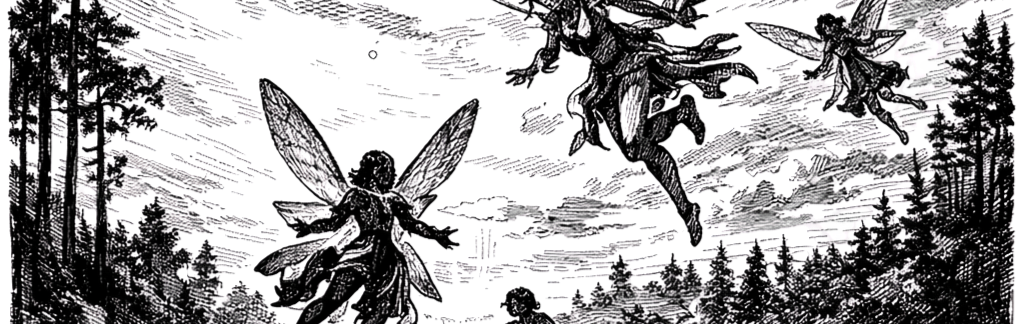
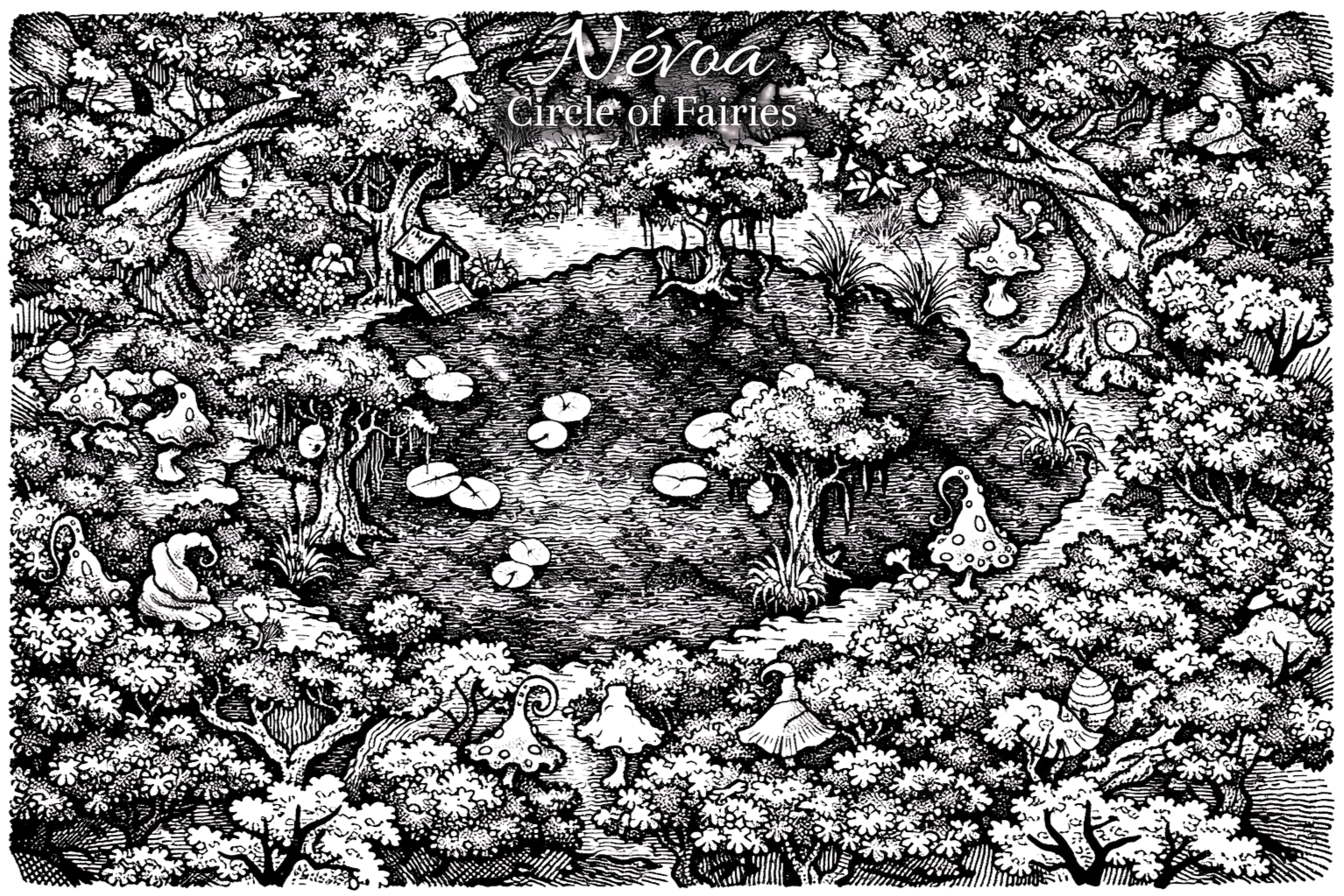
Hidden deep in the heart of the forest, there is a place that seems to breathe with a life of its own. The Mist is an entire community of tiny creatures known as fairies, living as if the woodland itself were part of them. It is a concealed territory, swallowed by fog even before sunrise, filled with ancient magic bound to nature.
Life Inside the Mist
The fairies’ daily life doesn’t resemble a typical village of tall folk and humans. Here, they build their homes directly into tree trunks or among branches, using thick bark, broad leaves, and living flora itself as shelter. A fairy’s home is compact, every space designed with millimeter, perfect intention, from the kitchen to resting quarters or rooms for the young.

Social Structure:
Harems and Hierarchy
Each group of fairies lives in units called harems, not in the human sense of indulgence, but as an intimate family/hive of four to six members, all bound by affection, labor, and magic.
At the center of each harem stands the most important figure, something akin to a “queen bee” or “drone king.” This leader does not rule by decree; instead, they are the emotional and magical axis that keeps the group in harmony.
The other members have clearly defined roles: tending food, maintaining emotional balance within the group, defending the home from natural dangers (wind, rain, larger insects), and ensuring that both magical and daily routines flow without disruption.
Surviving in the “Giant” World
From a human perspective, the entire forest is a colossal realm to the fairies. An anthill looks like a towering fortress; a single drop of water can become a lake.
The world beyond their homes, roots, trunks, and leaves, is both dangerous and wondrous. They hunt small insects for food, cultivate lichens and tiny fruits, and even treat ladybugs as dairy livestock.
Seasonal Cycles and Magic
When winter ends, the Mist awakens like a living organism. Ice melts away, water begins to flow, flowers bloom into colorful carpets, and mushrooms swell until they resemble little benches. This transition sets the rhythm of fairy life.
Fairy magic is tied as much to nature as it is to the emotions of the community. Each skin tone, wing pattern, and personal glow is an expression of the vital energy pulsing within them—not something imposed from outside.
Circles and Important Decisions
When the time comes to choose a new “king” or “queen,” the entire Mist erupts into a magical frenzy: celebrations, flower contests, dancing, bonding rituals, and sometimes serious fights over territory or the favor of other fairies.
This cycle feels almost like a natural ceremony, more spiritual and emotional than political, because everything there vibrates with the magic and traditions of the forest itself.
circle of fairies island

+🔍︎

You can find the villagers in this story in the following places:
linerik hub . Home. Névoa . broken bones . Pandrake

Who Are the Broken Bones?
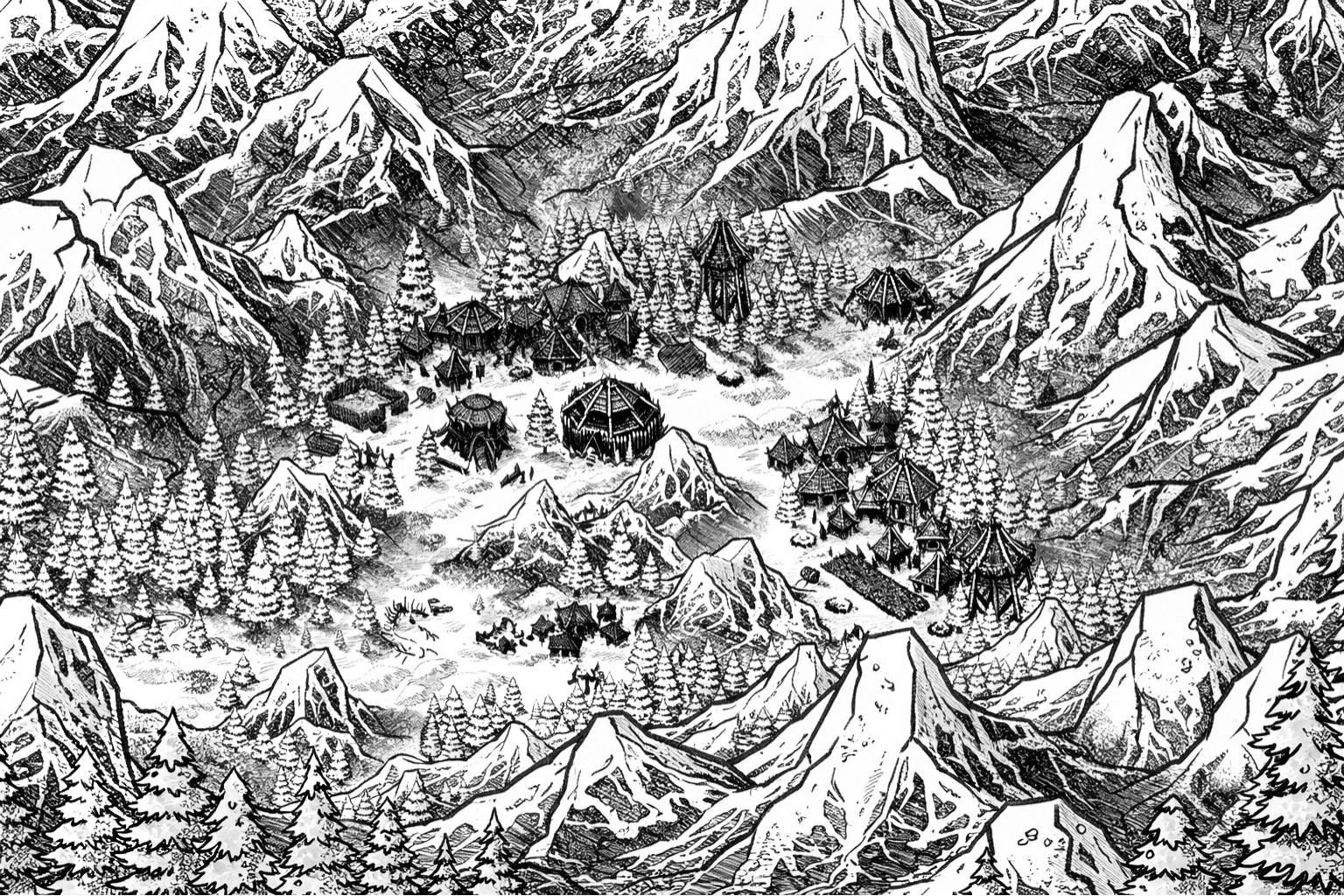
The Broken Bones are a fierce and resilient orc clan, forged in the most inhospitable reaches of the mountains. They are neither small nor peaceful, they are an entire tribe with their own culture, beliefs, and way of life, shaped by the harsh realities of rocky terrain and extreme climates.
Society and Hierarchy
In this clan, strength is law, and everything revolves around it:
Each orc is judged by their ability to fight, hunt, and survive.
Status within the clan is not granted by birth, but earned through sweat and battle.
Internal conflicts, brutal duels and trials of strength, decide who rises and who falls in the hierarchy.
The supreme leader of the Broken Bones bears a blunt, fitting title: the “Bone Chief.” He is not only the biggest and strongest, but the one who has proven courage, wisdom, and unbreakable resolve.
The Role of Each Orc
The clan’s structure is divided into roles that sustain the tribe:
Elite warriors protect the group and lead assaults.
Hunters and blacksmiths ensure food supplies and the forging of powerful weapons.
Shamans are formidable spiritual figures who commune with war gods, ancestral spirits, and the primal forces of nature.
All of this reflects a core belief of the Broken Bones: every role matters, and everyone contributes to survival in a brutal world.
Beliefs and Rituals
The clan’s bond with the natural world runs deep:
They worship war gods and the raw, ancient forces of earth and mountain.
Before battles or in critical moments, they perform bloody rituals, war dances, and sacrifices, seeking strength and protection.
To them, combat is not merely physical, it is spiritual. Honor, courage, and devotion to the clan matter more than victory alone.
Life in the Mountains
The mountains are not just home; they are part of the Broken Bones’ identity:
They live in houses of wood, stone, and leather, fortified in hard-to-reach locations, using the terrain itself for defense and ambush.
Hunting and knowledge of natural cycles are essential. Survival depends as much on raw strength as on wisdom of the land around them.
Wars and Enemies
The Broken Bones are far from isolated. They exist in a state of constant warfare, not only for territory, but for honor:
Conflicts with rival orc clans are always looming.
They are also frequently challenged by elves, dragonborn, and dwarves who covet the riches of the mountains.
Even with crude weapons and sheer brute force, the clan’s savage fighting style turns every clash into a trial of endurance and courage.
The Spirit of the Clan
In the end, the Broken Bones are more than a symbol of brutality — they embody survival itself:
Resilience against the elements.
Strength measured not only in muscle, but in the will to endure.
Honor earned through pain and on the battlefield.
They live and fight as one with the mountains they call home — and in Mistyndor, few challenges are as relentless as those they face.

+🔍︎

You can find the villagers in this story in the following places:
linerik hub . Home. Névoa . broken bones . Pandrake
linerik hub . Home. Névoa . broken bones . Pandrake
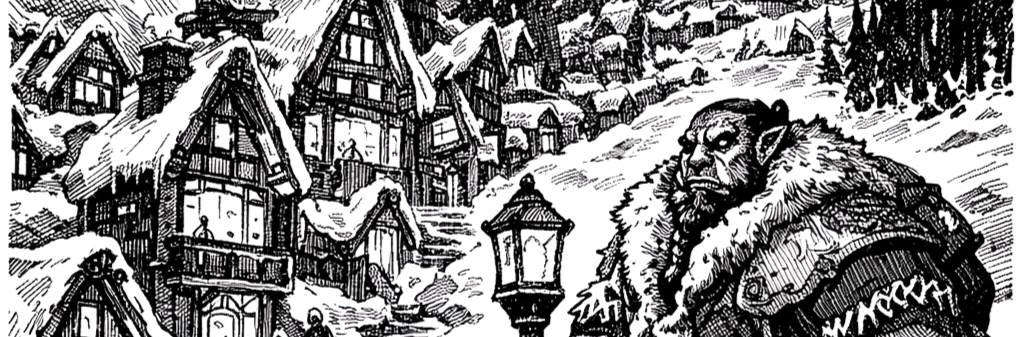
What Is Zaji?
The Broken Bones are a fierce and resilient orc clan, forged in the most inhospitable reaches of the mountains. They are neither small nor peaceful, they are an entire tribe with their own culture, beliefs, and way of life, shaped by the harsh realities of rocky terrain and extreme climates.
Wars and Enemies
The Broken Bones are far from isolated. They exist in a state of constant warfare, not only for territory, but for honor:
Conflicts with rival orc clans are always looming.
They are also frequently challenged by elves, dragonborn, and dwarves who covet the riches of the mountains.
Even with crude weapons and sheer brute force, the clan’s savage fighting style turns every clash into a trial of endurance and courage.
The Spirit of the Clan
In the end, the Broken Bones are more than a symbol of brutality — they embody survival itself:
Resilience against the elements.
Strength measured not only in muscle, but in the will to endure.
Honor earned through pain and on the battlefield.
They live and fight as one with the mountains they call home — and in Mistyndor, few challenges are as relentless as those they face.
linerik hub . Home. Névoa . broken bones . Pandrake
Mythology of the stars
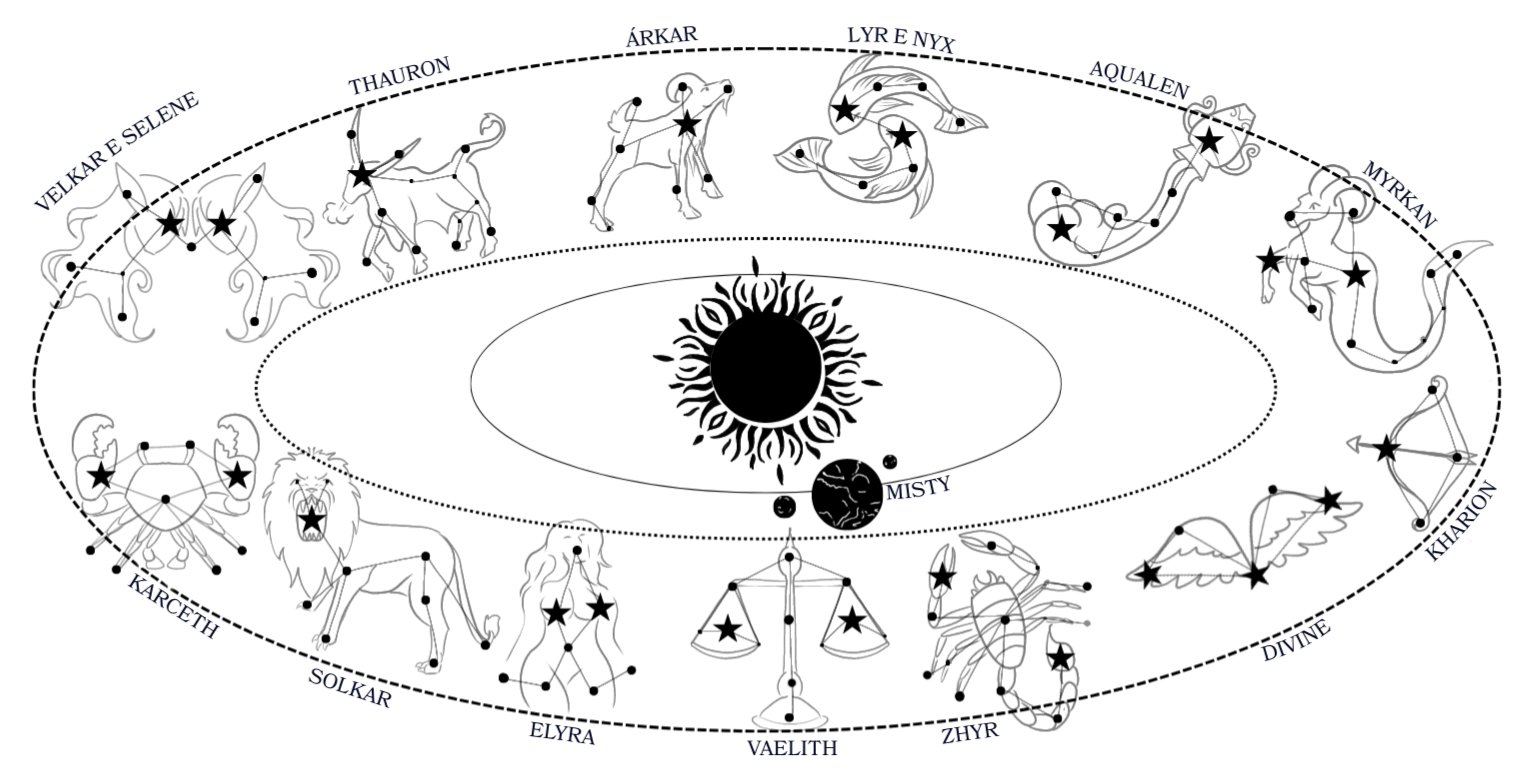
Árkar – the Crimson Horn
They say he was the first to charge across the ash plains when the Ancient Gods fell in the Massacre of the Three Thrones. Árkar was not an animal, but an entity forged of magma and the bones of titans. He carved a path with his head, tearing mountains apart so that the peoples would have somewhere to hide during the Fall of the gods.
When he was finally shattered by a maddened divinity, his burning skull became a constellation.
Represents: impulse, righteous war, the violent beginning of ages. (Aries)
Thauron – the Green Colossus
Not a bull, but a primordial spirit that arose when the blood of a dead god soaked the fertile soil of the central continent, Soulthia. Thauron raised entire forests with the weight of his own steps.
Orcs believe he is one of Nature’s faces, not as a conscious entity, but as a brute and sacred force. When Thauron fell asleep, his body became mountain ranges covered in moss; no one knows where he slumbers.
Strength, endurance, territory.(Taurus)
Velkar and Selene – the Echoes
Two elven siblings born beneath a fractured moon. One died defending Mystindor from the first skullwalkers who entered through the gate of hell that opened in Ignis; the other made a forbidden pact to share his essence with his dead brother. The ritual failed, neither of them remained whole.
They became two stars that never touch, yet never drift apart.
Imperfect duality. Mirroring. Loyalty that defies death. (Gemini)
Karceth – the Abyssal Carapace
An ancient marine creature that emerged when Onix, the Dragon Goddess, lay upon the ocean to form Pandrake. Karceth tried to stop the creation of the island, fearing the dominion of dragons.
Onix crushed her, but honored her strength by placing her form in the sky.
Fierce protection. Instinctive defense. Survival even against gods.
Coastal peoples still leave offerings at low tide from time to time. (Cancer)
Solkar – the Solar Lion
Not a common lion, but a golden beast created by a god now dead and forgotten. Solkar was the guardian of the sacred fire before the rise of Onix.
When he refused to bow to the new divine order, he was defeated. His mane became the radiance of the constellation that burns at the height of summer.
Pride. Presence. Leadership that asks no permission. (Leo)
Elyra – the Weaver of Veils
The first human and witch to receive a fragment of a reincarnated divinity. Elyra witnessed the collapse of the gods and chose not to become one. Instead, she wove the Veils, the invisible barriers separating the physical world from the spiritual plane.
She vanished after completing her work. Some say she still walks as a mortal, reincarnating across different eras.
Precision. Purity as lucid awareness. Delicate order. (Virgo)

Vaelith – the Weight of Souls
Created after the Massacre of the Three Thrones, when the world descended into war that wiped out much of the continent, forming the great Bloom Crater. Vaelith is neither person nor creature, but a relic with consciousness, a living scale forged from the bones of a god known as Férion.
Skullwalkers believe their souls are weighed by this entity before crossing the Veil between life and rebirth.
Balance is not kindness, it is consequence. (Libra)
Zhyr – the Silent Sting
One of Vita’s first offspring. Unlike the others, he was a mortal son without powers, yet made for war. His gift was torpor, a mist that paralyzed body and soul.
Betrayed by those who feared his silent power, he was slain and cast into the sea. Vita raised him to the stars as a warning.
Intensity. Patient vengeance. Transformation through pain.
When Zhyr rules the sky, Orion does not exist, in Mystindor, the hunter has been forgotten. (Scorpio)
Kharion – the Glass Centaur
Half crystalline stag, half warrior.
He trained heroes during the Age of the Reincarnated Gods, shortly after the Massacre of the Three Thrones. He died teaching, as he lived. They say his body gave rise to the Tree of Life in the desert of Litar.
Quest. Wisdom earned through scars. Clear direction in a broken world.(Sagittarius)
Myrkan – the Goat of the Depths
When the seas receded after the Massacre of the Three Thrones, something rose from the abyssal fissures. Myrkan had the body of a goat and a serpentine tail covered in scales.
He did not flee from monsters. He was the monster that made the impossible happen.
Ambition. Survival in hostile terrain. Instinct allied with strategy. (Capricorn)
Aqualen – the Bearer of Memory
He does not carry water, but memories. Aqualen arose when Vita’s tears mixed with the ocean after the death of her companion, Férion.
Some say he reincarnates in creatures capable of hearing the sea.
Flow of knowledge. Renewal. Distribution of stories. (Aquarius)
Lyr and Nyx – the Fish of the Veil
Two aquatic serpents who guided souls during the Dark Age that died in the war after the Massacre of the Three Thrones. When the portals began to collapse, they bound themselves with threads of light so as not to be lost in the void between planes.
Even today they appear together in the sky.
Sensitivity. Union beyond matter. Dissolution of the ego. (Pisces)
Divine – the Eternal Flame
The rarest sign of all. Those born under it carry fragments of reincarnated gods, whether to continue forgotten legacies or to begin entirely new eras. The constellation arose when the third god, Férion, sacrificed himself to prevent the Fall of the Three Thrones from severing the gods’ connection to their progeny. His flame crossed the sky, marked by five stars that shine even during eclipses.
Those born under the Divine bear an innate aura of power, drawing creatures, prophecies, and conspiracies. There are no limits to their destiny, but there are also no guarantees: their presence alters the world, whether bringing rebirth or catastrophe.
Silent authority. Inevitable transformation. Living legacy.
The blessing of the stars
Blessing or Curse?
The so-called “Blessing of the Stars” is described by the elders as a rare phenomenon that marks the birth of certain creatures with physical traits linked to the zodiac sign under which they were born. The origin of the mutation remains unknown, and the fact that it affects different races, without any apparent distinction, only deepens the mystery. Cases are scarce, unpredictable, and surrounded by speculation. Those who bear the stellar mark tend to provoke extreme reactions: they are either elevated to the status of prodigies or pushed to the margins of society. Caught between veneration and rejection, the Blessing of the Stars remains unexplained, an enigma that neither scholars nor priests have been able to unravel.

linerik hub . Home. Névoa . broken bones . Pandrake